

One storage platform. Several ways to unlock local power.
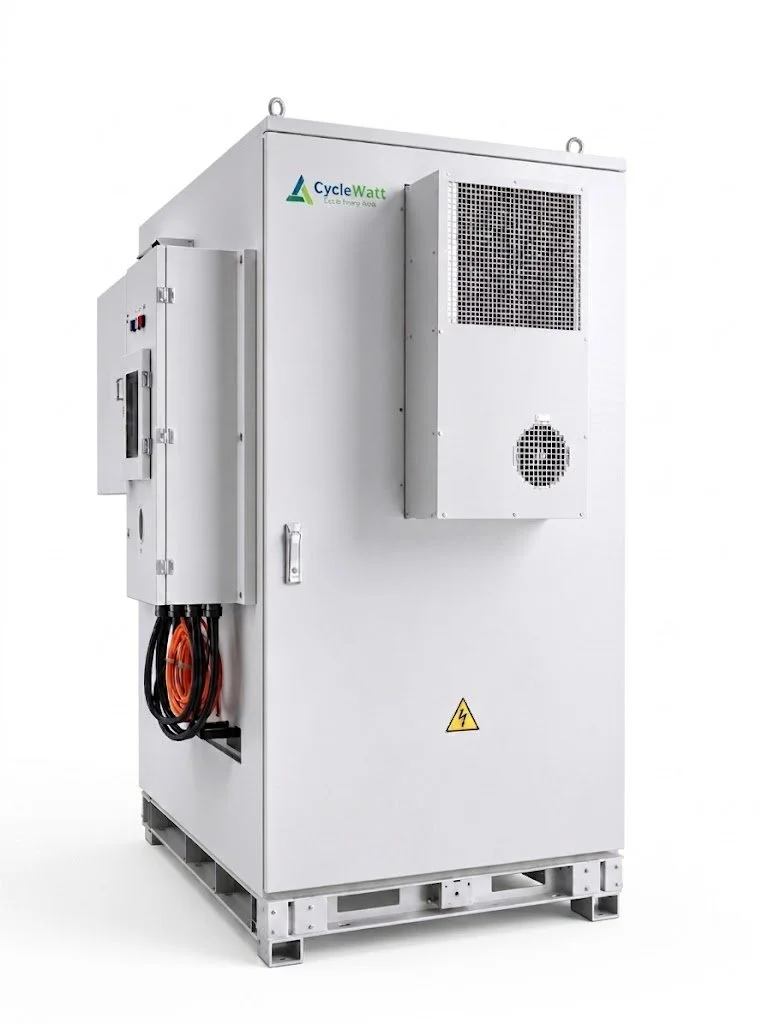
How Our E-Stack® Can Transform Your Energy Use?
Open each application to see the site constraint, energy flow, potential value, typical customer and information needed for a first engineering discussion.
01
Peak shaving and load shifting
Use storage to reduce site peaks and improve local energy use.
Short, expensive demand peaks
Charge low, discharge high
Lower pressure on contracted power
Industrial and commercial sites can charge storage during lower-demand periods and discharge during peaks. The design objective is to reduce pressure on contracted power and improve the use of locally generated energy.
02
Virtual capacity for charging sites
Deliver short high-power charging events behind a constrained grid connection.
Connection power stays limited
Supplies the temporary power gap
Deploy earlier without waiting for reinforcement
A local battery supplies the difference between the available grid connection and the temporary charging peak. This can support faster deployment and may reduce the scale of an immediate grid upgrade.
03
Bus and fleet-depot closed loop
Reuse retired fleet packs to support the next generation of electric vehicles.
Known battery history and inventory
Qualified packs become a depot buffer
Battery retirement and charging solved together
Retired fleet packs become the storage buffer that supports charging for newer vehicles. The operator addresses battery retirement and charging capacity in the same project.
04
Solar and wind integration
Capture local renewable energy and use it when the site needs it.
Variable production and curtailment
Absorb excess, release later
Higher self-consumption, smoother injection
Storage can absorb excess local generation and return it when the site needs it. E-Stack® can also reserve an interface for future photovoltaic integration where panels are not yet installed.
05
Critical-load support
Provide a controlled local energy buffer where project architecture permits.
Short outage or unstable supply
Controlled energy buffer
Continuity where architecture permits
Where the system architecture, switching arrangement and certification permit, storage can provide a controlled buffer for critical loads during short supply disturbances.
Project-fit estimator
See the first engineering path for your site.
This guided check identifies the information needed for a technical discussion. It does not calculate guaranteed savings or provide a final system size.